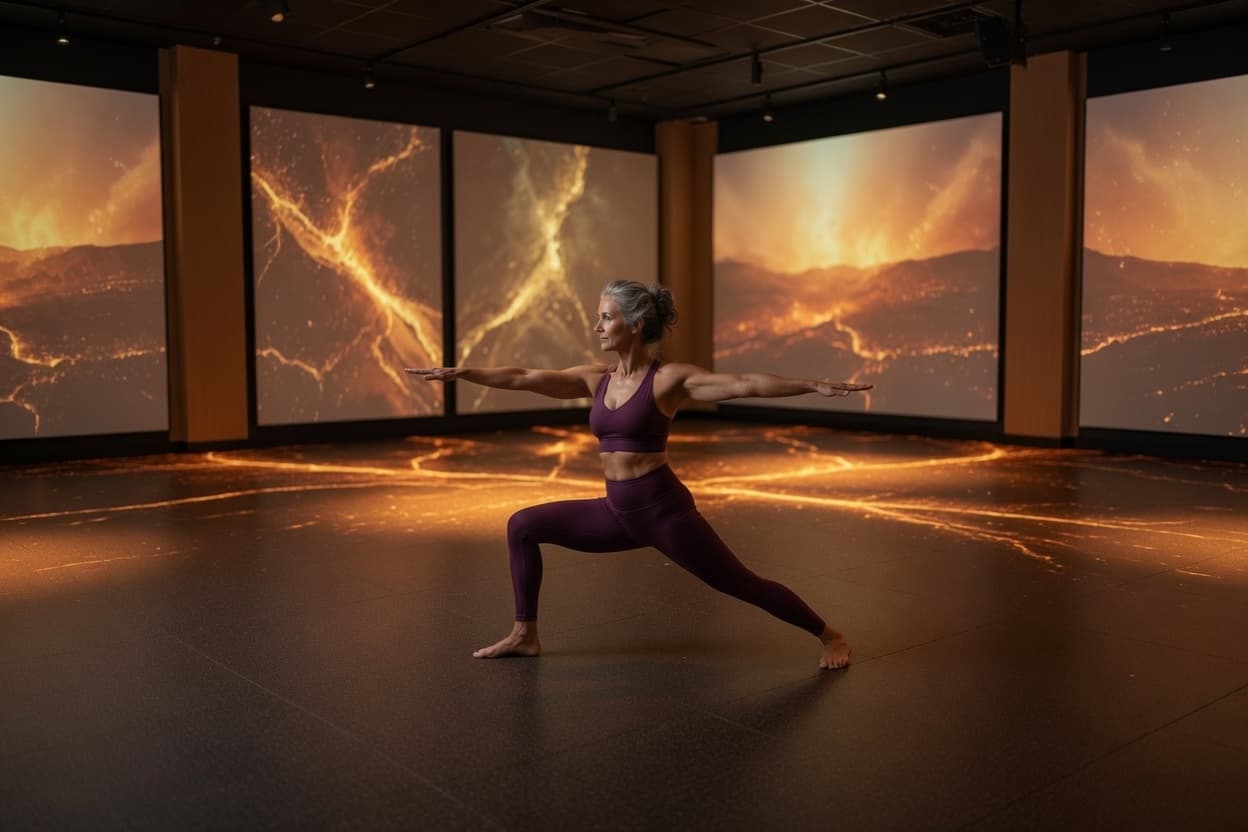
Perimenopause and menopause change how your body works — including how it handles exercise and how it handles heat. A lot of the advice women hear in this stage is about slowing down and avoiding anything that makes them hot. The research points somewhere more hopeful: movement is one of the most effective tools for this season of life, and for many women, the heat isn't something to simply avoid — it's something the body can be trained to handle better over time.
Here's what's actually changing, what genuinely helps, and how to work with heated classes instead of around them.
What changes in your body during perimenopause and menopause?
As estrogen declines, several things shift at once:
- Your internal thermostat gets touchier. The "thermoneutral zone" — the band of core temperature your body tolerates without sweating or shivering — narrows. That's why a small rise in core temperature can suddenly tip into a hot flash. The heat-handling system becomes over-sensitive, which matters a lot for what comes next.
- Bone density falls faster. Estrogen helps protect bone, so its decline speeds up bone loss and raises the risk of osteoporosis.
- Muscle is harder to keep. Women lose muscle more quickly in this window, which affects strength, metabolism, and the support around the joints.
- Sleep and mood take a hit. Night sweats fragment sleep, and hormonal swings can raise anxiety and low mood.
- Fat tends to move to the middle. Body composition shifts toward the abdomen — the so-called "menopause belly" — often without any change in how you're eating.
None of this is a personal failing. It's physiology — and most of it responds to movement.
Does exercise actually help with menopause symptoms?
Yes, and the evidence is genuinely strong. In a 2016 controlled study published in the journal Menopause, a 16-week program of regular exercise improved women's thermoregulatory control and reduced both the frequency and the physical severity of their hot flashes. Strength and weight-bearing work directly counter the bone and muscle loss this stage brings. Regular movement improves sleep, steadies mood, and helps manage the shift in body composition. And a 2024 systematic review of two dozen trials found that yoga eases menopausal symptoms.
Exercise isn't a consolation prize here. It targets the actual mechanisms behind the symptoms.
Hot flashes and heat: should you avoid heated classes?
This is the question we hear most — and the instinct to avoid anything that makes you hot is completely understandable. But the science suggests the opposite is worth a look.
A hot flash isn't your body reacting to heat being "bad." It's a sign your heat-handling has become over-sensitive — that narrowed thermoneutral zone means the system overreacts to small changes. Avoidance doesn't widen that zone back out. A body that's kept away from any heat stays reactive to it.
What does help is training the system. The strongest evidence is for regular exercise: it's been shown to improve thermoregulatory control, lower core body temperature, and reduce how often and how intensely hot flashes hit. Heat adaptation builds on the same principle — the well-documented changes the body makes in response to repeated, sensible heat exposure (earlier and more efficient sweating, a lower resting core temperature, less strain on the heart) target the very mechanisms that misfire during a hot flash. (We go deeper on those mechanics in how the body adapts to heat.)
A few honest caveats matter here. Most of the direct research is on regular exercise, not heated classes specifically — so the heat-adaptation angle is a sensible extension of the science, not a proven cure. Individual tolerance varies a lot. And in the moment, external heat, humidity, and hard effort can still set off a flash; research has linked hotter, more active days to more hot flashes that day. So this isn't about pushing through. For many women, gradual heat exposure builds resilience over time; others feel better staying in cooler formats while symptoms are active. Either way the smart approach is the same: go gradually, stay well-hydrated, let you set the temperature, and back off on hard days. Adapt where it helps — don't force it.
How to navigate heated classes through menopause
A practical way to work with the heat rather than fear it:
- Start cooler. You don't have to begin in a 100°F room. ALIVE's classes run across a range — from gentler ~85°F formats like yin, barre, and Pilates up to full hot — so you can start where you're comfortable and let your tolerance build.
- Hydrate more than you think you need. Water through the day, and electrolytes around class, since you may sweat more than you used to.
- Work with your symptoms, not against them. On a poor-sleep or high-symptom day, choose a lower-heat or gentler class. Save the hotter rooms for days you feel strong.
- Ease in and cool down. Layers you can peel off, a towel, and stepping out for air if you feel lightheaded are all completely normal.
- Consistency over intensity. The thermoregulatory benefits come from regular exposure over weeks — not from one punishing session.
- Listen to your body. It's the best gauge you have. The goal is steady adaptation, not toughing it out.
Why strength and weight-bearing movement matter most now
If you change only one thing about how you move in menopause, make it this: load your body. The estrogen drop accelerates both bone and muscle loss, and the most effective counter is weight-bearing movement and resistance.
That's where barre and Pilates earn their place. ALIVE's Spark (Total Body Barre) uses light hand weights and resistance bands to build strength and give bone the loading it needs, and Gravity (Pilates) builds the deep core and stabilizer strength that protects the spine and joints. Cardio and yoga round out a good week, but strength is the non-negotiable in this stage of life.
What about menopause weight and "menopause belly"?
The shift of fat toward the midsection is hormonal, not a willpower problem — which is exactly why the old "just do more cardio" advice tends to underdeliver here. Building and keeping muscle raises your resting metabolism and improves how your body uses energy, and a consistent mix of strength and movement does more for midlife body composition than endless cardio alone. It's a slower, steadier change than the quick fixes marketed online — but it's the real one.
How often should you exercise during perimenopause and menopause?
A balanced week most women can actually sustain:
- 2–3 strength / weight-bearing sessions (barre, Pilates, resistance work) for bone and muscle.
- Some cardio for heart health and mood — heated flow classes count here.
- 1–2 gentler sessions (yin or yoga calm) for sleep, stress, and easy thermoregulatory practice.
Three to five times a week, mixed, is a strong target — but the best plan is the one you'll keep. Start where you are and build.
The bottom line
Menopause changes the rules, but it doesn't take movement away — it makes movement more important. You don't have to fear the heat or stay out of the studio. With a gradual, hydrated, you-set-the-pace approach, heated movement can actually help train the system that's misbehaving, while strength work protects your bones and muscle for the decades ahead.
ALIVE's first month of unlimited classes lets you find your mix across the full temperature range — start gentler with Aura, build strength with Spark and Gravity, and work toward the heat at your own pace. Explore the class types or find your studio in Plano, Southlake, or Las Colinas.
This article is for general education, not medical advice. Perimenopause and menopause affect everyone differently — if you have heart concerns, take medications, or have specific symptoms, talk with your doctor about what's right for you, especially before starting heated exercise.
References
- Bailey TG, et al. Exercise training reduces the frequency of menopausal hot flushes by improving thermoregulatory control. Menopause. 2016;23(7):708–718.
- The effectiveness of yoga on menopausal symptoms: a systematic review and meta-analysis of randomized controlled trials. International Journal of Nursing Studies. 2024.
- Freedman RR. Reduced thermoregulatory null zone in postmenopausal women with hot flashes. American Journal of Obstetrics and Gynecology. 1999.