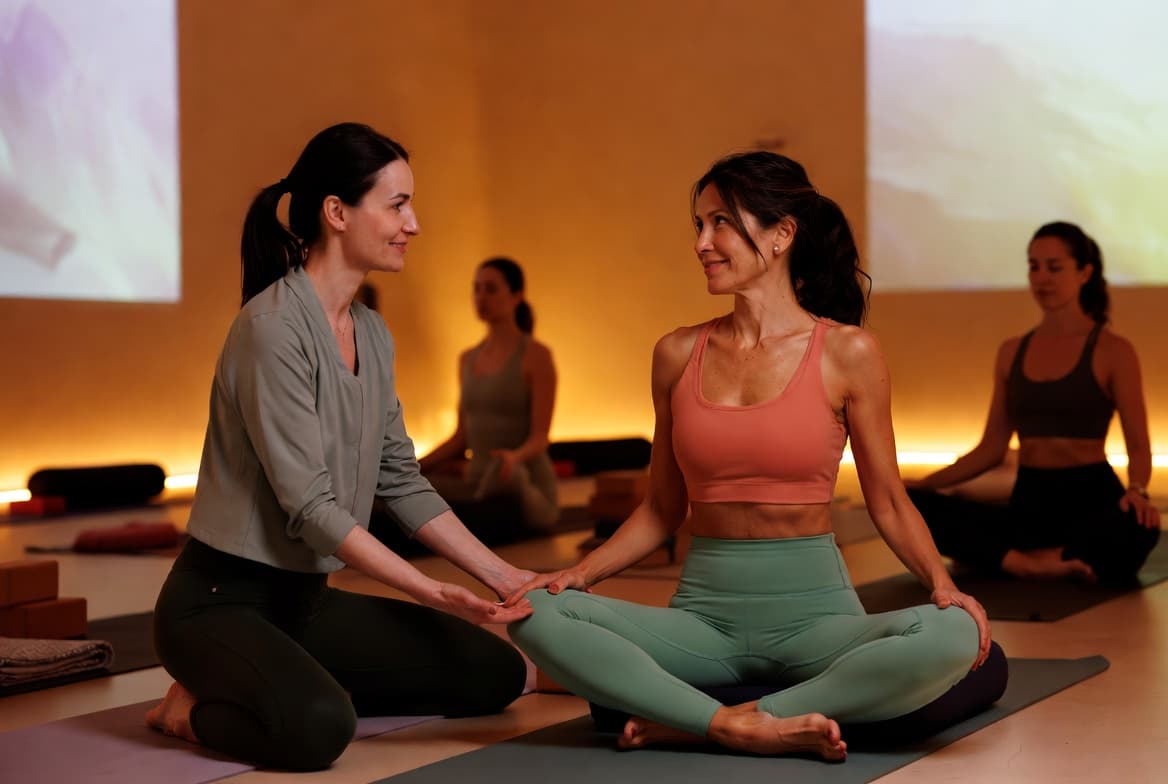
Yin yoga is one of the easiest yoga styles to start and one of the most surprising to experience.
It's easy to start because the physical demands are minimal. You don't need flexibility. You don't need strength. You don't need prior yoga experience. You sit, lie down, and fold into shapes that everyone can find some version of. Most of class happens on the floor.
It's surprising because what feels easy in the first sixty seconds becomes hard in a different way by minute three. Yin asks you to stay put while sensation builds. The holds are long. Your mind gets loud. Your legs fall asleep. You want to move. The practice is staying anyway.
This guide walks through what actually happens in your first yin class, what to wear, what to bring, and how to set yourself up to get the most out of it — especially if you're trying heated yin at ALIVE.
What Happens in a Yin Class
A typical yin class runs 60 to 75 minutes. A good teacher moves through 8 to 12 poses, holding each for three to five minutes, with short rests in between.
The structure usually looks like this:
Opening settle (5 minutes). You lie down or sit comfortably. The teacher introduces the practice, maybe sets an intention or a focus for the class. The pace slows. Music is usually quiet or absent.
First pose (3–5 minutes). Usually something accessible — a supported forward fold, a reclined stretch, or a gentle hip opener. You find the shape, let the muscles soften, and breathe. The teacher may cue less here than in other styles of yoga. The quiet is part of the practice.
Transition (1 minute). You come out of the pose slowly, then rest neutrally — maybe lying on your back — for a minute before the next pose. These transitions matter. Rushing past them loses some of the effect.
Remaining poses. The class cycles through long holds and short rests. Some poses are symmetrical (both sides at once — like caterpillar or butterfly). Others are asymmetrical (done on one side, then the other — like dragon or shoelace). The sequence tends to target specific areas: one class might focus on hips, another on the spine, another on the upper body.
Savasana (5–10 minutes). Final rest, lying on your back, fully propped or unsupported. In yin this tends to be longer than in other styles.
You'll leave class feeling different than you entered — loose in places you didn't know were tight, mentally slower, and often unexpectedly tired. That tired feeling is the nervous system having shifted, not the muscles having worked.
What to Wear
Layers. This is the top tip for traditional yin. You barely move during class, so your body cools down. A long-sleeved top and comfortable pants are a safe default, with socks close by for savasana.
For a heated yin-style class (like ALIVE's Aura), layers matter less. The room stays warm the whole time. Wear what you'd wear to any yoga class, meaning fitted or stretchy clothing that lets you fold comfortably. Don't overdress; you'll be in a 92°F room.
Avoid restrictive clothing. Jeans are out. Tight waistbands that press into your belly in forward folds are uncomfortable. Jewelry and belts get in the way.
No shoes. Yoga is practiced barefoot. You can wear grippy socks during the warm-up or savasana if you run cold, but the poses themselves are barefoot.
What to Bring
A mat. Most studios provide them; at ALIVE, we have mats available but many members bring their own.
A water bottle. You won't sweat much in traditional yin, but hydration supports the fascial release the practice is working toward. In heated yin, drink more than you think you need.
A towel. Useful in any yoga class. Essential in heated yin.
Props (if the studio doesn't provide them). Blocks, bolsters, blankets, and straps are standard yin props. ALIVE provides all of these. If you practice at home, start collecting them — you'll use them every class.
An open mind. Yin feels different than other practices. Expect stillness to be harder than movement. Expect sensation to grow during holds. Expect your mind to fight the pace at first. That's normal. Stay anyway.
How to Prepare
Eat light. Full stomach + yin poses = uncomfortable. Eat a proper meal two to three hours before class, or a small snack 30–60 minutes before if you're hungry.
Hydrate throughout the day. Don't chug water right before class. Space hydration over the 4–6 hours leading up.
Arrive early. Fifteen minutes early is ideal for a first yin class. Introduce yourself to the teacher. Mention any injuries, pregnancies, or conditions that might need modification. A good instructor will offer specific prop setups to make the practice safer.
Set your space. Lay out your mat near the middle of the room if possible — you can see the teacher easily and you won't feel exposed at the edges. Gather props within arm's reach so you don't have to move once you settle in.
Go in with one intention. Yin is internal. The practice sharpens when you bring one thing to meet — a tight hip, a stressful week, a question you're sitting with. Nothing big. Just something small and honest to give the stillness a direction.
Common Beginner Worries (Addressed)
"I'm not flexible enough for yoga." Flexibility isn't required for yin. The opposite is true: yin is how you develop flexibility, especially the deep fascial kind. Every pose has modifications and prop options to let you meet the shape at your own range.
"I can't sit still for that long." Almost nobody can at first. Staying is the practice. Your mind will wander, your legs will want to move, your attention will try to escape. The skill being trained is noticing all of that without acting on it. It gets easier.
"I'm worried about injury." Yin is one of the safest yoga styles. No high-impact movements, no weight bearing, no risk of falling. The main injury risk in yin is forcing a pose past the working edge — overstretching ligaments or pushing a joint into pain. The fix is simple: back off. You should feel sensation, not sharp pain. Ever.
"I don't know what I'm doing." Your teacher does. Watch them, listen, and follow. In a coached class format like ALIVE's, an instructor will walk through the room and offer adjustments or prop suggestions. The first class is always the hardest because everything is new. By class three, it's familiar.
"I won't get a workout." Correct — you won't. Yin isn't a workout in the cardiovascular or strength sense. What it does is different and complementary. If you want a workout, take a vinyasa or hot yoga class. Yin is the recovery side of the ledger.
Start with Aura
For beginners at ALIVE, we suggest starting with Aura (Yoga Calm), which is the yin-style class on the schedule right now.
Aura (92°F, yin-adjacent) is the softer entry. The pacing is slow but you're still moving. Holds are longer than most flow classes but shorter than traditional yin. The calming intent is there. The heat is warmer, which many new practitioners find easier to settle into than cooler traditional yin studios. Many members describe Aura as deeply restorative — the class they take when they need the nervous-system reset without committing to the intensity of long stillness.
Neutron (85°F, traditional yin) is the full yin experience. Three-to-five-minute holds, minimal movement, deep tissue work. The benefits are more pronounced, but so is the mental challenge. It is not on the ALIVE schedule right now, so Aura is where the stillness tolerance gets built.
A reasonable path for a new practitioner:
- First two weeks: Two Aura classes. Get comfortable with slow pacing, warmth, and longer holds.
- Weeks three and four: Add a second Aura class. See how the longer holds feel now that slow pacing feels normal.
- By month two: Aura should feel familiar enough that you can use it deliberately, on recovery days and after hard training alike.
How Often to Practice
Start with one yin class per week. You'll learn the format, notice how your body responds in the hours and days after, and build the stillness skill gradually.
Move to two to three classes per week once you've found the practice. This is where the deeper benefits — flexibility, recovery, stress regulation — start to become obvious.
Pair yin with your other training. Yin isn't a standalone fitness program. It works best alongside other practices — vinyasa for strength and cardio, hot yoga for heat adaptation, strength training for muscle, cardio for cardiovascular health. Yin fills the recovery gap most training programs leave open.
The Mental Part Nobody Warns You About
Here's the honest version of what to expect in your first yin class: you will probably dislike parts of it.
Somewhere around minute three of your second or third pose, you'll want to move. You'll be bored. You'll think about your phone. You'll wonder why you're paying for this. This is normal. This is the practice.
What's being trained in those moments is the skill of staying. Not forcing, not gritting teeth — just staying with what's actually happening in your body and mind without immediately trying to change it. That skill is what yin is really for. The flexibility and fascia benefits come as byproducts. The main gift is a nervous system that learns to meet discomfort without reacting.
Most people who start yin and keep going report the same thing: they didn't love their first class, they kept coming anyway because their hips or back felt better afterward, and sometime around class five or six the practice clicked. That click is the practice starting to work.
Yin at ALIVE Studios
ALIVE offers Aura at Plano, Southlake, and Las Colinas.
Aura (Yoga Calm) — 92°F / 50%. The entry point. Yin-adjacent flow, gentle pacing, deeply restorative in outcome. The class most beginners love first.
Neutron (Yin Yoga) — 85°F / 50%. Traditional yin. Long holds, connective-tissue work, the full practice. Not on the schedule right now.
Classes every 30 minutes throughout the day. Morning, midday, or evening — pick whenever yin fits your schedule. No advance booking required for most class times.
Coached format. Every class at ALIVE has an instructor in the room who can help with prop setup, modifications, and form. For beginners, this matters — someone watching and offering guidance makes the first few classes significantly easier.
Try it. Your first month of unlimited classes is $24.99 and includes Aura and every other class on the schedule. Take a few and see what your body gravitates toward.