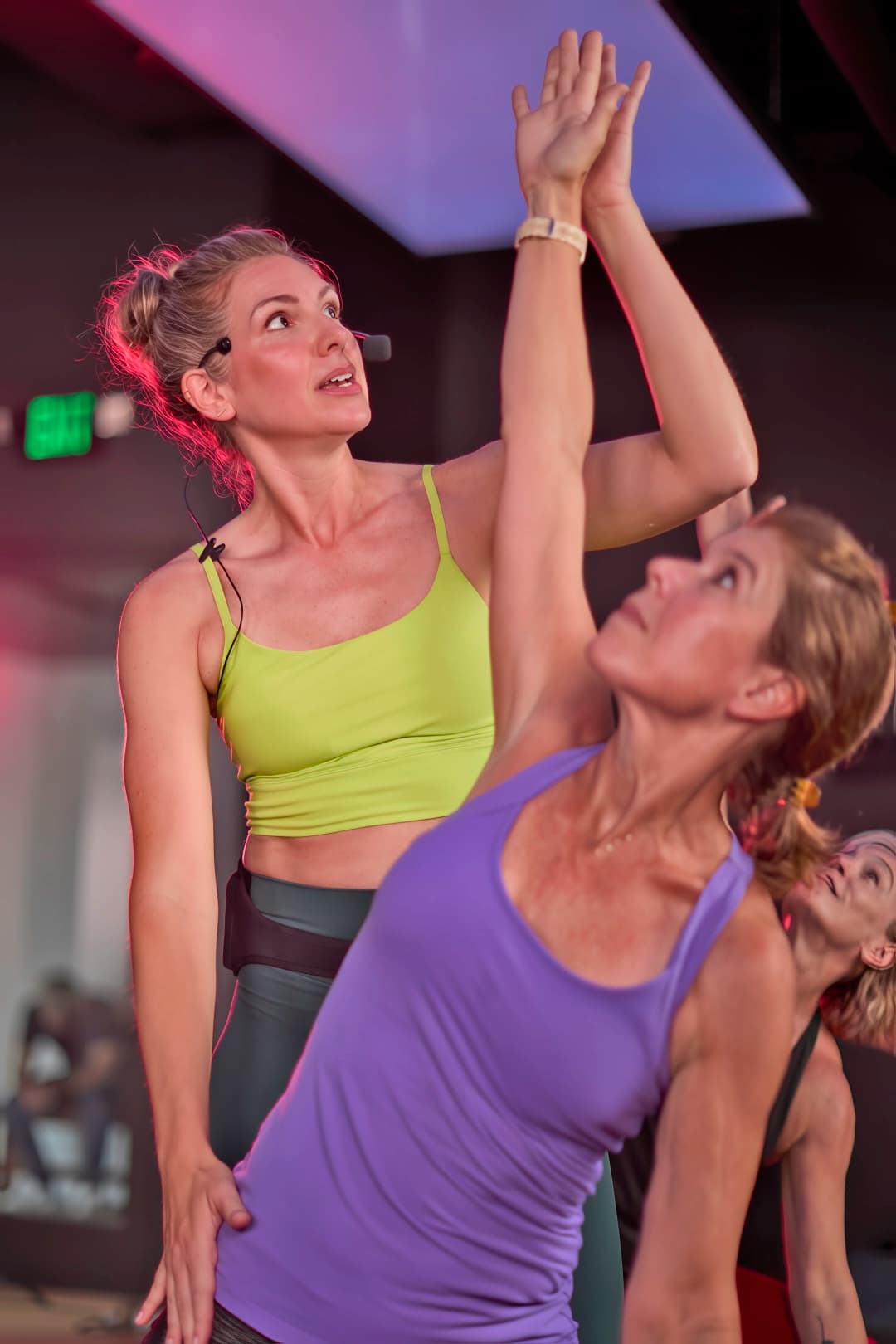
Dynamic Core Fusion
Challenge your dynamic core with a focus on hinges and pull variations. This fluid movement class will enhance stability and strength.
Dynamic Core Fusion is a teacher-led workshop built around two of the six fundamental movement patterns: the hinge and the pull. It runs at 85°F and 50% humidity. The work is fluid rather than static, and the aim is stability and strength that hold up under movement rather than only in a held position.
Your body is organised around six patterns: push, pull, hinge, squat, loaded carry, and ground work. Each one earns its place, and two of them carry unusual weight for how most people live. The hinge is how you bend from the hips instead of the spine, and most back trouble traces back to getting that wrong. The pull is the pattern modern life erodes fastest, because almost nothing in a day asks you to pull. Dynamic Core Fusion teaches both directly: an instructor works the principles, ties them to the movements you already meet in your regular classes, and adds the supporting work that advances your body's understanding of the pattern.
Why Hinge and Pull Together?
They share a chain. The hinge loads the back of your body from heels to shoulders, and the pull works the same posterior chain from the other direction. Training them in one session means the whole back line gets organised at once, which is why the class calls it fusion rather than a pair of separate blocks. Its companion workshop, Advanced Body Dynamics, takes the squat and the push. Between them you cover four of the six patterns, and members who take both usually describe the second one as the half they did not know was missing.
How Is This Different From Molecule?
Molecule loads yoga postures to build strength through the hips-to-shoulders chain, and it is a class: you do the work. Dynamic Core Fusion is a workshop: you learn the pattern, with an instructor cueing why the hinge protects your spine and what a real pull feels like. Molecule builds the chain, this teaches you to use it. They complement each other rather than compete.
Who Dynamic Core Fusion Is For
- Desk-bound bodies. Sitting all day shortens the front and switches off the back, which is precisely the chain this session addresses. The damage is worth understanding.
- Anyone who bends from the spine. Learning to hinge is one of the highest-value hours available to a back that does real-life lifting. (Existing back pain? Doctor first, then tell your instructor.)
- Practitioners strong in front, weak behind. Common in anyone whose training skews toward pushing and pressing.
- Members who took Advanced Body Dynamics. This is the other half of the same idea.
What to Expect
Moisture-wicking clothes and water. Mat, towel, and any equipment the session uses are provided. Expect real instruction: more cueing, more correction, and more explanation of the why than a typical class carries. The movement is continuous rather than held, so it feels like a workout even while it is teaching.
How Often
Once a week is enough, and a handful of sessions is enough to change how you move everywhere else. Pair it with Advanced Body Dynamics for the full four patterns, and let your regular classes be where you spend the rest of the week.
Where to Practice
Workshop sessions rotate by studio and by day, so check the schedule for where and when this one runs.
Related reading: What Are the 6 Fundamental Movement Patterns? · What Sitting 9+ Hours a Day Does to Your Body · Mobility vs Flexibility