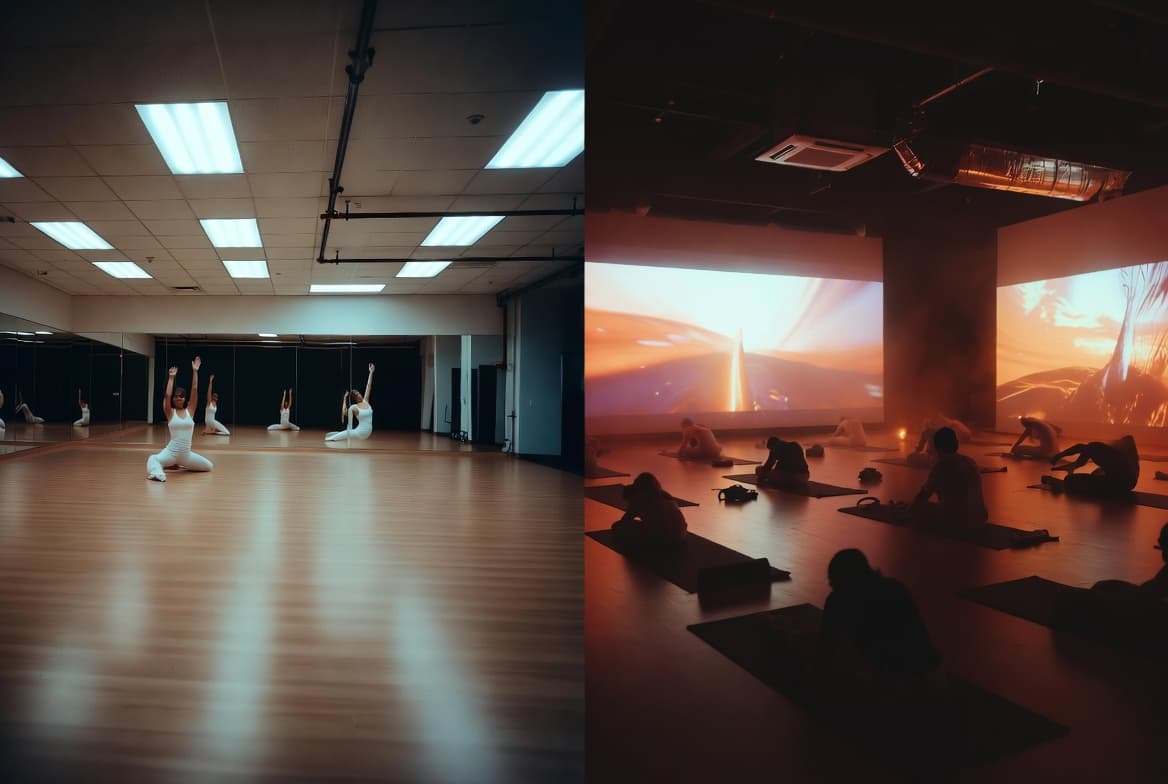
Bikram yoga and hot yoga are not the same thing. Bikram is one specific style of hot yoga -- the original, the most rigid, and the most controversial. Hot yoga is the broader category that now includes dozens of styles, temperatures, and formats.
If you've been Googling "is Bikram the same as hot yoga" or "what is Bikram yoga now called," this is the breakdown you need. We'll cover the history, the key differences, and why modern hot yoga has moved beyond the Bikram format.
For a complete introduction to heated practice, start with What Is Hot Yoga?.
What Is Bikram Yoga?
Bikram yoga was created by Bikram Choudhury in the 1970s. It follows a strict, unchanging format:
- 26 poses and 2 breathing exercises, performed in the same order every class
- Room temperature: exactly 105°F with 40% humidity
- Duration: 90 minutes, every time
- No music, no variations, no modifications (in the traditional format)
- Mirror-facing setup so students can check their own alignment
The consistency is the point. You do the same sequence every session, which allows you to measure progress precisely. Over time, you see exactly where your body is improving.
Bikram popularized the idea that heat transforms yoga. Before he brought heated practice to the United States, yoga in America was primarily a room-temperature activity.
Why Did Bikram Yoga Get Renamed?
Many studios that once called themselves "Bikram" have rebranded to "hot yoga," "26+2," or "original hot yoga." The reason is the founder.
Bikram Choudhury faced multiple allegations of sexual assault and harassment from former students and instructors. Several civil lawsuits resulted in judgments against him.
Studios that valued the 26-pose sequence but wanted no association with the founder dropped the Bikram name. The practice itself isn't the problem -- the brand became toxic. Today, studios offering "26+2" or "original hot yoga series" are teaching the Bikram sequence without his name.
What Is Modern Hot Yoga?
Hot yoga is any yoga practiced in a heated room, typically 85-105°F. Unlike Bikram, there's no single sequence, no fixed temperature, and no rigid format. The term covers a wide range of styles:
- Hot vinyasa -- flowing sequences that change every class, linking breath with movement
- Hot power yoga -- strength-focused sequences with challenging holds and athletic transitions
- Hot yin yoga -- slow, passive stretching with poses held 3-5 minutes
- Infrared hot yoga -- studios using infrared panels instead of forced-air heating for a different heat experience
- Immersive hot yoga -- modern studios combining heat with video instruction, lighting design, and sound (this is what ALIVE Studios does)
The variety is the point. You can practice heated yoga every day and never repeat the same class.
Key Differences: Bikram vs Hot Yoga
| Factor | Bikram Yoga | Modern Hot Yoga |
|---|---|---|
| Sequence | Fixed: 26 poses + 2 breathing, same every class | Varies by style and instructor |
| Temperature | Always 105°F, 40% humidity | Ranges from 85-105°F depending on class |
| Duration | Always 90 minutes | 45-60 minutes (varies) |
| Music | None (traditional) | Often curated playlists or soundscapes |
| Instructor style | Dialogue-based, scripted cues | Varies: coached, guided, or video-led |
| Modifications | Traditionally discouraged | Encouraged -- meet your body where it is |
| Class variety | One format | Multiple formats (vinyasa, power, yin, flow) |
| Technology | Mirrors for self-correction | Studios like ALIVE use screens, lighting, sound |
Which Approach Is Better?
Neither. It depends on what you want from your practice.
Choose Bikram-style (26+2) if you:
- Want absolute consistency -- the same class every time
- Like tracking progress by repeating identical sequences
- Thrive in structure and don't want surprises
Choose modern hot yoga if you:
- Want variety in your practice
- Prefer different temperatures for different moods or goals
- Like music, atmosphere, and immersive environments
- Value modifications and meeting your body where it is today
The physical benefits of hot yoga -- flexibility, strength, cardiovascular conditioning, stress relief -- apply to both approaches. The heat is what drives the transformation, not the specific sequence.
How Your Body Responds to Both
Whether you're in a Bikram studio at 105°F or a modern hot yoga class at 95°F, your body goes through the same process: heart rate increases, blood vessels dilate, muscles warm faster for deeper stretching, sweat production ramps up, and mental focus intensifies as the heat demands your attention.
Over time, your body adapts to the heat. Blood volume increases, sweat efficiency improves, and core temperature regulates more effectively. The difference is that Bikram gives you one heat setting (105°F, always) while modern studios let you progress. At ALIVE, you might start with Electron at 92°F and work up to Photon at 100°F+ as your tolerance builds.
ALIVE's Approach: Modern, Not Bikram
ALIVE Studios is not a Bikram studio. The approach is rooted in the same principle -- heat transforms the practice -- but everything else has evolved:
- Multiple class formats at different temperatures (Electron, Glow, Atom, Photon), so you choose the heat level that matches your goals and experience
- Immersive technology with floor-to-ceiling video screens and curated soundscapes that create an environment, not just a hot room
- Both immersive and coached options -- practice with video guidance for an independent experience, or join a coached class with a live instructor
- Classes every 30 minutes, making consistent practice realistic for any schedule
- Modifications welcomed -- the goal is your practice, not a rigid sequence
ALIVE builds on the tradition Bikram established with variety, technology, and accessibility that didn't exist when Bikram was the only heated game in town. For a closer look at formats, read Immersive vs Coached Classes, or see the full lineup at ALIVE's Hot Yoga Classes.
Beyond Hot: Yin Yoga as the Recovery Counterpart
Both Bikram and other hot yoga styles are yang practices — active, warming, muscle-engaging. Yin yoga sits on the opposite side of yoga's spectrum: slow, passive, working connective tissue rather than muscle through long 3-5 minute holds.
Yin isn't a replacement for a Bikram or hot yoga practice — it's the recovery companion. The heat-engaged practice stretches and strengthens muscles; the yin practice releases the deeper connective tissue that accumulates tightness from repeated hot sessions. ALIVE's Aura (Yoga Calm) at 92°F is the closest thing on our schedule to that complement, a yin-adjacent gentle flow. See What Is Yin Yoga? for the full explainer.
Your Next Step
Bikram opened the door. Modern hot yoga walked through it.
If you're curious about heated practice -- whether you've done Bikram before or you're completely new -- the best thing you can do is try a class and feel the difference.
Explore the class schedule and pick a format. New to heat? Start with Electron. Experienced practitioner? Try Atom or Photon. Find your nearest ALIVE Studios in Plano, Southlake, or Las Colinas, and start your unlimited trial month.
One class. That's all it takes to understand why hot yoga keeps evolving.