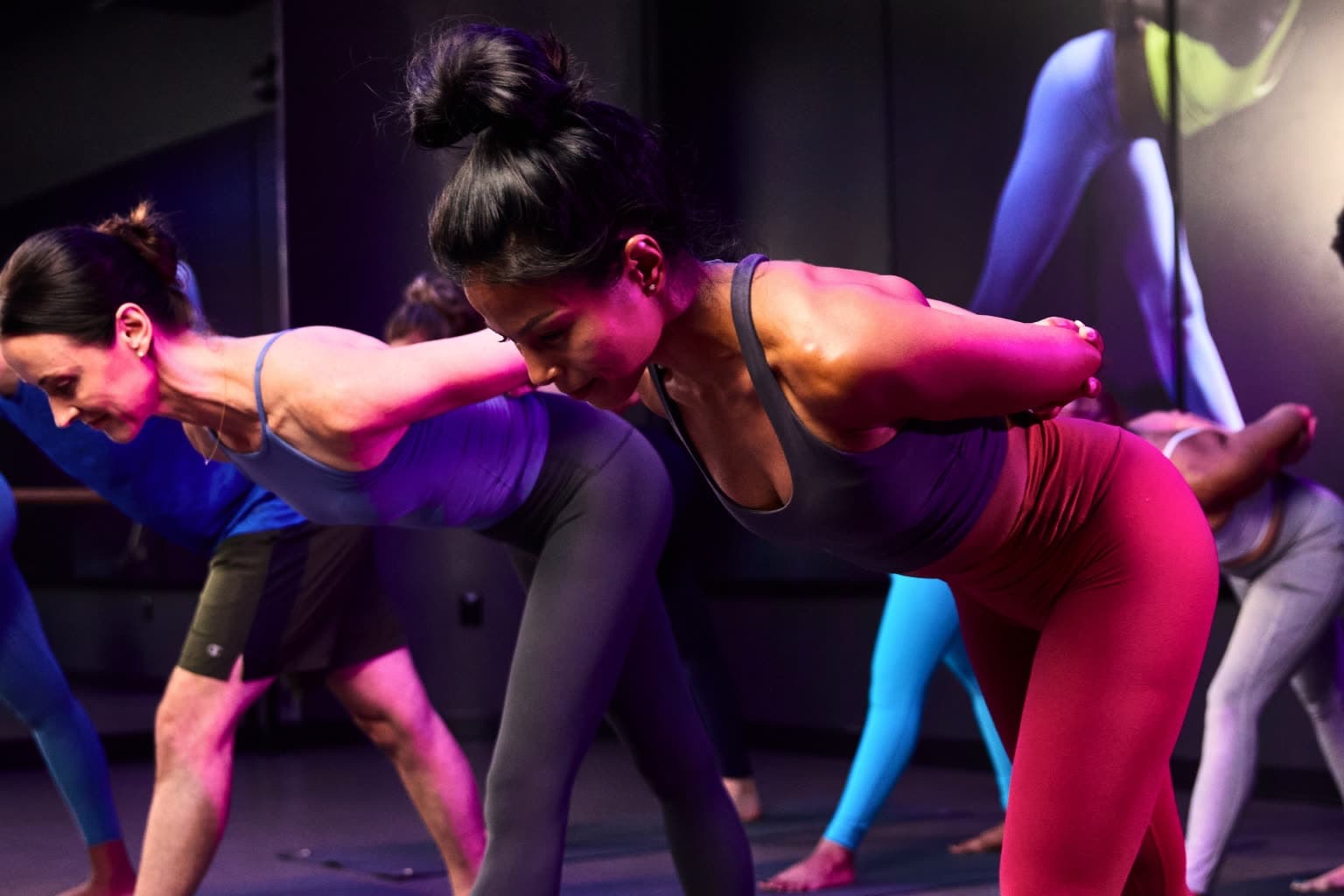
Hot yoga is yoga practiced in a heated room, typically between 90-105°F with controlled humidity. The heat warms your muscles before you start moving, allowing deeper stretches and greater range of motion than room-temperature yoga. Your heart rate increases, you sweat significantly, and the workout feels more intense—even though the poses themselves may be the same.
The concept is simple: heat makes muscles more pliable. When muscle tissue is warm, it stretches further with less resistance. This means poses that feel challenging in a regular studio become more accessible in a heated room. You can go deeper, hold longer, and explore your flexibility in ways that cold muscles won't allow.
A typical hot yoga class runs 60-90 minutes. You'll move through a sequence of standing poses, balancing postures, floor work, and stretches. The instructor guides you through each movement while the heat does its work on your body. By the end, you'll be drenched in sweat and surprisingly energized.
Hot yoga isn't one specific style—it's an umbrella term for any yoga practiced in heat. Bikram, vinyasa, power yoga, and yin yoga can all be done in heated rooms. The temperature and humidity vary by style and studio, but the core principle remains: heat transforms the practice.
Why This Matters
The heated environment changes yoga in specific ways:
- Faster warmup means safer stretching. Cold muscles resist stretching and are more prone to strain. Heat prepares your body for deep work from the first pose.
- Increased heart rate creates cardio benefit. Your heart works harder to cool your body, turning a flexibility practice into a cardiovascular workout.
- Sweating supports detoxification. Heavy sweating helps your body release toxins through the skin. Many practitioners report feeling "cleaned out" after class.
- Heat demands mental focus. The intensity of the environment pulls your attention into the present moment. Distraction becomes difficult when your body is working this hard.
- Deeper poses become accessible. Positions that seem impossible at room temperature often become achievable when muscles are warm and pliable.
For a deeper look at what the research says about these effects, read What Are the Benefits of Hot Yoga?.
Who This Is For
Beginners — The heat actually makes hot yoga more accessible, not less. Warm muscles stretch more easily, so you're less likely to strain something while learning. Start with a beginner-focused class and don't hesitate to rest when needed.
Athletes seeking recovery and mobility — Hot yoga complements high-impact training by improving flexibility and range of motion. Many runners, cyclists, and weightlifters use it as active recovery.
People who want an efficient workout — If you have limited time, hot yoga delivers strength, flexibility, cardio, and stress relief in a single session. It's a full-body experience.
Anyone dealing with stress — The combination of heat, breath work, and physical focus creates genuine stress relief. The environment demands your attention, which means your worries fade into the background.
Those who feel stiff or inflexible — If touching your toes feels impossible, hot yoga might change that. The heat helps tight muscles release in ways they won't at room temperature.
What Happens in a Hot Yoga Class
Before Class
Arrive hydrated. Drink water throughout the day—not just right before. Bring a large water bottle, a yoga mat, and at least one towel (two is better: one for your mat, one for your face). Wear light, breathable clothing. Less is more in the heat. If this is your first time, our complete walkthrough covers everything you need to know: How Do You Prepare for Your First Hot Yoga Class?.
The Room
You'll walk into a warm room. The temperature ranges from 90-105°F depending on the class style. Some studios use traditional heating; others use infrared panels that warm your body directly rather than just the air. The humidity is controlled to help you sweat without feeling suffocated.
The Class Structure
Most hot yoga classes follow a pattern:
- Centering — A few minutes of breath work to transition into the practice
- Warmup — Gentle movements to prepare the body (shorter than regular yoga since the heat does much of this work)
- Standing series — Balancing poses, warriors, and standing stretches
- Floor series — Seated poses, hip openers, twists, and forward folds
- Cool down — Gentle stretches and final relaxation (savasana)
After Class
You'll be sweaty. Really sweaty. Take your time getting up—moving too fast can cause dizziness. Drink water. Many people feel energized and calm simultaneously, a combination unique to hot yoga.
Types of Hot Yoga
Bikram Yoga
The original hot yoga. Bikram classes follow a fixed sequence of 26 poses and 2 breathing exercises, performed in a room heated to exactly 105°F with 40% humidity. Every class is identical, which allows you to track progress over time. Sessions last 90 minutes. For a full comparison of Bikram's rigid format and the broader world of hot yoga styles, see Bikram Yoga vs Hot Yoga.
Hot Vinyasa
Flowing sequences where movement links with breath. Unlike Bikram, the sequence changes each class. Temperatures typically run 95-100°F. The pace is faster, with continuous movement creating additional heat from within.
Hot Power Yoga
Strength-focused sequences that build muscle while you sweat. Expect more challenging poses, longer holds, and athletic movements. Good for those who want their yoga to feel like a workout.
Hot Yin Yoga
Slow, passive stretching where poses are held for 3-5 minutes. The heat helps connective tissue release more deeply. Lower intensity than other styles but profoundly effective for flexibility and recovery.
Immersive Hot Yoga
A modern approach that combines heated practice with video instruction, immersive lighting, and sound design. At ALIVE Studios, floor-to-ceiling screens guide your practice while the environment engages all your senses. You get structured instruction without someone watching your every move. Not sure if immersive is right for you? Read Immersive vs Coached Classes: Which Is Right for You? to compare formats, or explore ALIVE's Signature Hot Yoga Classes in Plano to see the full lineup.
What to Wear and Bring
Clothing
- Fitted shorts or leggings — Loose clothing gets heavy with sweat and can interfere with poses
- Fitted tank top or sports bra — Breathable, moisture-wicking fabric is essential
- Avoid cotton — It absorbs sweat and becomes heavy and uncomfortable
For a complete guide on choosing the right clothing and gear, read What to Wear to Hot Yoga.
Gear
- Yoga mat with good grip — You'll be sweating on it; traction matters
- Large water bottle — You'll drink more than you expect
- Towel for your mat — Prevents slipping as you sweat
- Small towel for your face — Sweat will drip; you'll want to wipe it
- Hair ties or headbands — Keep hair out of your face
At ALIVE Studios, we provide mats and towels—so you just need water and the right clothes.
Before You Arrive
- Hydrate throughout the day (not just right before)
- Eat light—a full stomach in the heat is uncomfortable
- Skip heavy lotions or oils (they make you slippery)
Pros and Cons
Pros:
- Deeper stretches than room-temperature yoga
- Cardiovascular benefit from heat exposure
- Efficient full-body workout in one session
- Accessible to beginners (warm muscles stretch easier)
- Stress relief through focused attention
- Visible progress as flexibility improves
Cons:
- Requires proper hydration (come prepared)
- Some people don't tolerate heat well
- Can feel intense for first-timers
- Need specific gear (towels, water, breathable clothes)
- Not recommended during pregnancy without doctor approval
The good news: heat tolerance improves with consistent practice. Learn how your body builds resilience in How Does Your Body Adapt to Heat and Humidity in Hot Yoga?.
Beyond Hot Yoga
Hot yoga is one format in a complete fitness program. At ALIVE Studios, your membership includes every class type:
- Hot Pilates (Gravity) — Core strength, posture, and spinal health in 85°F heat
- Barre (Spark, Particle, Subatomic) — Ballet-inspired sculpting with isometric holds and small pulses
- Yin-Style Yoga (Aura) — Slower pacing and longer holds that target connective tissue. The recovery counterpart to hot yoga's active practice
- Barre vs Pilates — Not sure which fits your goals? Here is an honest comparison
Many members combine all four: hot yoga for flexibility and heat adaptation, pilates for core, barre for sculpting, and yin for recovery and connective-tissue work.
Your Next Step
Try a class and feel the difference heat makes. Reading about hot yoga doesn't compare to experiencing it.
If you're new, start with a beginner-friendly class. If you've done room-temperature yoga before, you'll notice immediately how the heat changes what's possible in your body.
Explore our class types to find the right fit. Find your nearest ALIVE Studios and start your trial month. One session is all it takes to understand why hot yoga has become one of the most popular ways to practice.