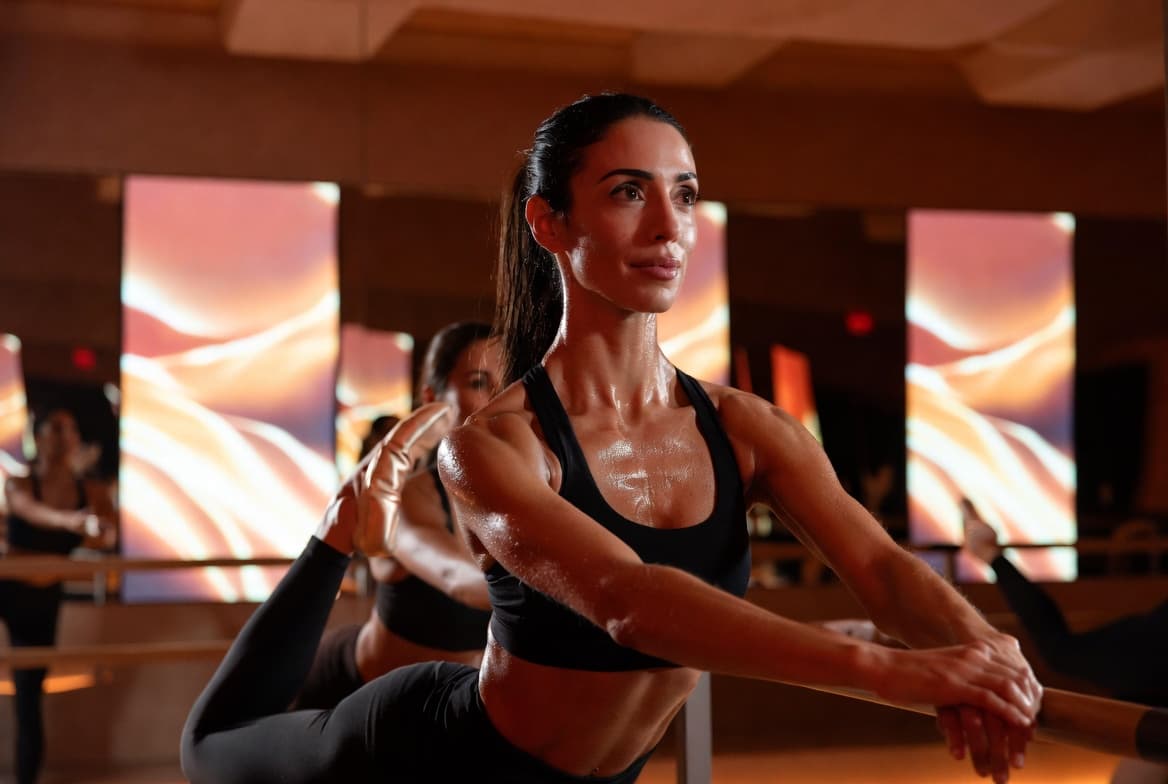
Barre is a low-impact, high-intensity workout that blends ballet-inspired movements with elements of Pilates, yoga, and strength training. Classes use a ballet barre for balance while you pulse, squeeze, and hold your way through small, controlled movements designed to fatigue specific muscle groups.
The result? Long, lean muscles, improved posture, and a full-body burn that sneaks up on you — barre is deceptively challenging.
How Barre Works
A typical barre class lasts 45–60 minutes and follows a structured sequence:
Warm-up — Light cardio and stretching to prepare your body. In a heated barre class like those at ALIVE Studios, the warm room (85°F) means your muscles are already primed before you start.
Arms and shoulders — Light weights (1–3 lbs) or bodyweight exercises. Small, repetitive movements that create deep muscle fatigue.
Thighs and glutes — The signature barre section. You'll hold the barre for balance while performing pliés, pulses, and isometric holds. This is where the "barre shake" happens — that involuntary tremble that means the muscle is working to exhaustion.
Core — Planks, crunches, and stabilization exercises. Many barre movements engage your core throughout, so by this point, your abs have been working for 30+ minutes.
Stretching and cooldown — Flexibility work to lengthen the muscles you just fatigued. Heat makes this especially effective — warm muscles stretch further and more safely.
Types of Barre Classes
Not all barre classes are the same. The format varies widely depending on the studio and the goal:
Traditional Barre
Slow, controlled movements with long isometric holds. Focuses on muscle endurance and sculpting. The pace is deliberate — you might hold a single position for 60 seconds while making micro-adjustments.
At ALIVE Studios, Spark (Total Body Barre) follows this approach. It's a full-body sculpting class that emphasizes isometric holds and precise form in an 85°F heated environment.
Cardio Barre
Faster pace, larger movements, higher heart rate. Combines barre fundamentals with dance-inspired cardio intervals. You'll sweat more, burn more calories, and feel like you've done both a strength and cardio workout.
At ALIVE, Particle (Cardio Barre) is the cardio barre option — high-energy, dance-inspired, and designed to get your heart pumping while still sculpting.
Core-Focused Barre
Some studios offer barre classes that zero in on core strength. These blend barre movements with Pilates-style core work.
ALIVE's Subatomic (Core Fit) fits this category — combining core-focused training with the heated environment.
Heated Barre
Most barre studios operate at room temperature. A heated barre class adds warmth (typically 85–100°F) to increase calorie burn, deepen stretches, and promote sweating. Heated barre is still relatively rare — if you've only tried room-temperature barre, the heated version is a noticeably different experience.
At ALIVE, all barre classes are heated to 85°F with 50% humidity using patented environmental controls that manage dew point directly, not just temperature. The heat feels challenging but breathable — never oppressive.
Barre vs Other Workouts
| Barre | Pilates | Yoga | HIIT | |
|---|---|---|---|---|
| Primary focus | Sculpting, toning | Core, posture | Flexibility, balance | Cardiovascular |
| Impact level | Low | Low | Low | High |
| Equipment | Barre, light weights | Mat (or reformer) | Mat | Varies |
| Pace | Moderate | Slow-moderate | Slow | Fast |
| Muscle approach | Isolate and fatigue | Strengthen through control | Lengthen through holds | Power through reps |
| Calorie burn | Moderate-high | Moderate | Low-moderate | High |
| Best for | Toning, endurance | Core strength, rehab | Flexibility, stress | Fat burning, athleticism |
Not sure which is right for you? Read our full comparison: Barre vs Pilates: Which Is Right for You?
Who Is Barre For?
Beginners: Absolutely. Barre uses bodyweight and light resistance — there's no complex equipment to learn. Most movements have modifications, and a good instructor (or a coached class at ALIVE) will guide your form. If you can stand and hold a railing, you can do barre.
Athletes and runners: Barre builds the stabilizer muscles that power sports don't target. Runners especially benefit from the glute and hip work. The low-impact nature means you can do barre on recovery days without taxing your joints.
Dancers and former dancers: Barre draws heavily from ballet training. If you have dance experience, you'll recognize the vocabulary (pliés, relevés, tendus) and feel at home immediately. If you don't have dance experience, don't worry — no choreography is involved.
People recovering from injury: The low-impact, controlled movements make barre safer than high-impact alternatives. Many physical therapists recommend barre-style exercise for rehabilitation. Always check with your provider first.
Anyone wanting to tone without bulk: Barre builds long, lean muscle through high reps and low weight. You won't bulk up — you'll define.
New to barre? Read Barre for Beginners: Everything You Need to Know.
What to Expect at Your First Barre Class
What to wear: Fitted, moisture-wicking clothing that allows full range of motion. Grippy socks are recommended (and often required) — they prevent slipping on the studio floor and barre. Avoid cotton, which absorbs sweat and gets heavy, especially in a heated class.
For more detail, see our guide on what to wear to hot classes.
What to bring: A water bottle (essential for heated barre), a small towel, and an open mind. ALIVE provides all equipment — mats, weights, blocks, and straps are in the studio.
How it feels: The first 15 minutes feel deceptively easy. By minute 30, your muscles will be shaking. By the end, you'll feel worked in muscles you didn't know you had. Soreness the next day is normal and a sign the isometric work did its job.
How to prepare: Hydrate throughout the day before class. Eat a light meal 1–2 hours before. For heated barre, bring extra water — you'll sweat more than you expect.
Read our full prep guide: How to Prepare for Your First ALIVE Class.
Benefits of Barre
Barre delivers a unique combination of benefits that few other workouts match:
- Lean muscle definition — High reps with low weight sculpt without adding bulk
- Improved posture — The focus on alignment and core engagement carries into daily life
- Increased flexibility — Every class ends with dedicated stretching (even more effective in heat)
- Joint-friendly — No jumping, no pounding. Your knees, hips, and back will thank you
- Core strength — Nearly every barre movement engages your core, even when targeting other muscles
- Mental focus — The mind-muscle connection required in barre builds concentration and body awareness
- Calorie burn — A heated barre class can burn 300–500 calories depending on intensity and format
Want the full breakdown? Read Benefits of Barre: Why This Low-Impact Workout Gets Results.
Heated Barre at ALIVE Studios
ALIVE Studios offers heated barre in a way no other DFW studio does.
Three barre formats — Spark for sculpting, Particle for cardio, and Subatomic for core. You pick the format that matches your goal for the day.
Patented heat — Every class is heated to 85°F with 50% humidity. ALIVE's dew point control system (US Patent 12,209,760) ensures the heat feels therapeutic, not suffocating. Sweat evaporates properly so your body can cool itself naturally.
Classes every 30 minutes — Barre classes run throughout the day from early morning to evening. No waitlists, no scrambling for a spot days in advance.
Immersive environment — Floor-to-ceiling screens with synchronized video, sound, and lighting timed to each movement. It's not just background ambiance — the immersive experience helps you stay present and push through the fatigue.
Coached format — An instructor watches your form, offers modifications, and adjusts your positioning. This matters in barre, where small form corrections make the difference between feeling nothing and feeling everything.
ALIVE has studios in Plano, Southlake, and Irving.
Ready to try heated barre? Your first month of unlimited classes lets you explore all three barre formats — plus hot yoga, pilates, HIIT, and more.
Pair With Yin for Recovery
Barre builds strength through isometric holds and high-rep sculpting. Yin yoga goes the opposite direction — long passive holds that release connective tissue and restore the nervous system. It's not a replacement for barre; it's the recovery layer that lets you train harder in every other class.
ALIVE's yin-style option is Aura (Yoga Calm) at 92°F, a yin-adjacent gentle flow and the most restorative class on the schedule. Start with What Is Yin Yoga? for the full explainer.