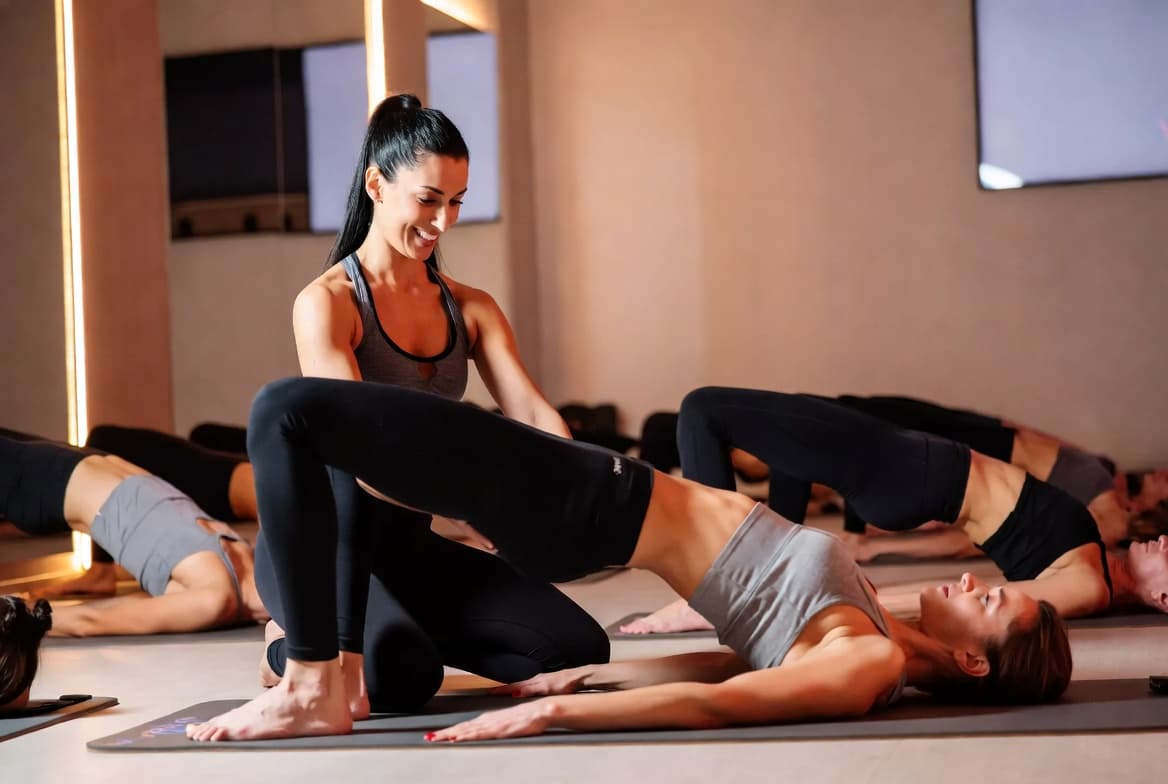
Hot pilates sounds intimidating. Pilates — in a heated room? If you've never done either, the combination might seem like it's for advanced fitness people only.
It's not. Hot pilates is actually one of the best starting points for beginners, and the heat is part of why.
New to the format entirely? Get the fundamentals in what hot pilates is and the benefits of hot pilates first — this guide picks up at your first class.
Why Hot Pilates Works for Beginners
Most people assume heat makes a workout harder. For pilates specifically, heat makes it better for beginners:
Warm muscles are more forgiving. When you're new to pilates, your muscles are likely tight — especially hamstrings, hip flexors, and shoulders. Cold muscles resist the controlled movements pilates demands. At 85°F, your muscles are pliable from the start, which means better form, deeper engagement, and less strain.
The movements are simple. Pilates doesn't involve complex choreography, heavy equipment, or explosive movements. You lie on a mat and perform controlled exercises guided by an instructor. The learning curve is gentle — you can follow along from day one.
Every exercise has modifications. A good pilates class (especially a coached class at ALIVE) offers modifications for every movement. Can't hold a full plank? Drop to your knees. Can't do a roll-up? Use a strap for assistance. The instructor adjusts the difficulty to your current level.
The heat masks the challenge. This sounds counterintuitive, but the warmth creates a meditative, almost spa-like quality. You're sweating, your muscles are working, but the environment feels more therapeutic than punishing. Many beginners find heated pilates less intimidating than a cold, bright gym.
What Your First Class Will Look Like
At ALIVE Studios, hot pilates is the Gravity class: 45–60 minutes, mat-based, 85°F, 50% humidity.
Minutes 0–10: Settling in. You'll roll out your mat, settle into the warm room, and the instructor will begin with breathing exercises and gentle spinal movements. This is where you connect your mind to your body.
Minutes 10–30: Core work. The core series is the heart of pilates. You'll do exercises like:
- The hundred — lying on your back, pumping your arms while holding your legs in a tabletop position
- Roll-ups — a slow, controlled sit-up using your core, not momentum
- Leg circles — lying on your back, circling one leg at a time to challenge hip stability
- Planks — front and side planks held for 15–30 seconds (with knee-drop modifications)
The instructor demonstrates each movement, then walks the room correcting form. In a coached class, you'll get direct feedback.
Minutes 30–45: Lower body and back. Bridges, side-lying leg work, and back extensions. These exercises target the muscles that support your spine — the ones that prevent back pain.
Minutes 45–60: Stretching. Deep stretches for every muscle you worked. In the heated room, this feels incredible — warm muscles stretch further without discomfort.
What to Wear
- Fitted, moisture-wicking clothes — You need to see your body alignment, and the instructor needs to see it too
- No shoes — Pilates is done barefoot (or in grippy socks)
- Lightweight fabrics — The room is 85°F and you'll sweat. Avoid cotton.
- Sports bra / supportive top — You'll be on your back, stomach, and sides throughout class
For the full guide: What to Wear to Hot Classes.
How to Prepare
The day before:
- Hydrate more than usual. Your body needs extra water for heated classes.
Day of:
- Eat a light meal 1–2 hours before class. Nothing heavy — you'll be lying on your stomach at some point.
- Bring a water bottle (non-negotiable for heated classes) and a small towel.
- Arrive 10–15 minutes early for your first visit to check in and get oriented.
During class:
- It's okay to rest. Drop out of a movement and reset when you need to.
- Breathe. Pilates uses specific breathing patterns, but if those feel confusing, just breathe naturally. The breathing technique comes with practice.
- Listen to your body. The heat will make you sweat more than expected. If you feel lightheaded, sit or lie down and sip water.
Full prep guide: How to Prepare for Your First ALIVE Class.
Common First-Class Mistakes (And How to Avoid Them)
Holding your breath. Pilates breathing is lateral thoracic (expanding the ribs sideways while keeping the core engaged). Most beginners either hold their breath during hard movements or breathe too shallowly. The fix: breathe out on the effort. If you can exhale during the hard part, you're doing it right.
Using momentum. The point of pilates is control. If you're swinging your legs during leg circles or using momentum during roll-ups, you're bypassing the muscles the exercise targets. Go slower. Smaller. The instructor will cue you.
Comparing yourself to others. The person next to you who makes it look effortless has probably been doing pilates for months. Your first class is about learning the movements and feeling how your body responds. There's no scoreboard.
Skipping the stretch. The stretching section isn't optional filler — it's where the flexibility benefits happen. In a heated room, the post-workout stretches are when your muscles are most receptive to lengthening. Stay for the full class.
How Often Should Beginners Practice?
Weeks 1–2: 1–2 classes per week. Give your body time to adapt to both the movements and the heat.
Weeks 3–4: 2–3 classes per week. You'll start to feel the movements becoming more natural.
Month 2+: 2–3 times per week is the sweet spot for ongoing results. You can go more often, but pilates is about quality over quantity — 3 focused classes beat 5 distracted ones.
Many ALIVE members pair pilates with other class types for a balanced week:
- Pilates (Gravity) 2x/week for core strength
- Barre (Spark or Particle) 1–2x/week for sculpting
- Hot yoga (Atom or Glow) 1–2x/week for flexibility
Read more about combining formats: Barre vs Pilates: Which Is Right for You?
Hot Pilates at ALIVE Studios
Gravity (Pilates) — ALIVE's heated pilates class. 85°F, 50% humidity, mat-based, coached. The instructor guides every movement and adjusts your form.
The heat is controlled. ALIVE uses patented environmental controls (not space heaters) to manage temperature and humidity precisely. The room feels warm and therapeutic — not unbearable.
Classes every 30 minutes — No fighting for time slots. Gravity classes run throughout the day at all three locations.
Everything is provided. Mats, blocks, straps, and props are in the studio. Just bring yourself, water, and a towel.
Three locations: Plano, Southlake, Irving.
Start with a trial month — unlimited classes across every format. Try Gravity, then try a barre or hot yoga class. See what your body responds to.