A great yoga studio comes down to three things, in this order: quality, access and price. Quality is instruction that's good every time you come, not just when the right teacher is on, in a room that's comfortable, clean and welcoming. Access is whether there's a class when you're actually free. Price is whether what you pay is fair for the quality and access you get. Judge all three by taking a few classes at the times you'd really go, before you commit to anything long term. A good studio makes that easy. One that pushes you to sign before you've practiced there is telling you something.
We've been running yoga studios since 2002, first as Sunstone Yoga, then as SunstoneFIT, and now as ALIVE, with three studios in Plano, Southlake and Las Colinas. This is the checklist we'd hand a friend, and it works for any studio, ours included. Where ALIVE does something differently, we say so.
What does quality look like in a yoga studio?
Quality is consistency of instruction, delivered by people who know what they're doing. One great class proves very little. The real test is whether the tenth class, at an odd hour, on a day your favorite teacher is off, is just as good as the first.
Is the instruction consistent?
In a teacher-led studio, the class you get depends on who's teaching. So ask about training. Many teachers are registered with Yoga Alliance as an RYT 200 or RYT 500, which means they completed 200 or 500 hours of training through schools registered with Yoga Alliance. That's a useful baseline, not a guarantee. Then take classes with more than one teacher, and watch for the same things each time:
- Can you follow the cues without staring at the teacher? Clear words matter more than a perfect demonstration.
- Does the sequence build? Warm-up, work, then a real wind-down, not a random string of poses.
- Are there options at every level? Easier and harder versions should be offered without anyone being singled out.
- Is rest allowed? Nobody should be pushed past what their body is telling them. Our piece on practicing without hands-on instruction explains why that feedback matters.
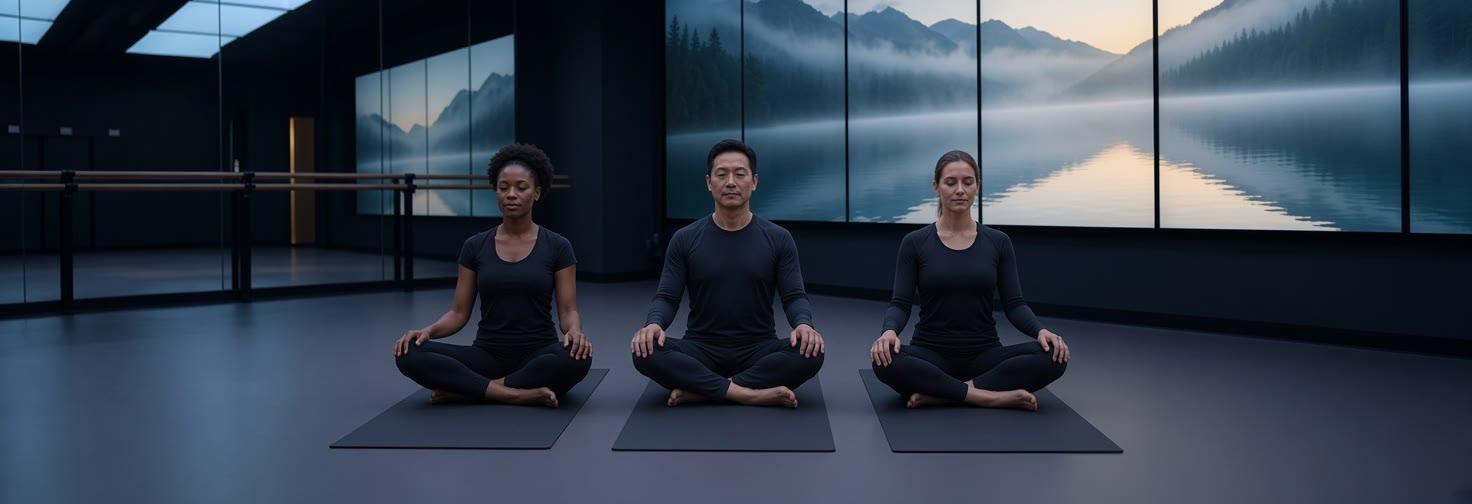
This is where ALIVE is built differently, and it's the reason our classes are consistent. Most of our classes aren't led by someone at the front of the room. They're guided by video and sound on floor-to-ceiling screens, and every posture and class element is chosen by our content director, a yoga instructor with more than 20 years of experience. The instruction in the first class of the day is the same instruction as in the last, in every one of our studios. In our coached classes, the video handles the demonstration, so the coach in the room can give the people there their full attention. Immersive vs. coached classes walks through the difference. If you want a live teacher leading from the front every time, that's a real preference, and a traditional studio will suit it better.
Is the heat comfortable, or just hot?
In a hot yoga studio, the room is part of the instruction. What your body feels isn't the temperature alone; it's heat and humidity together. Your body cools itself when sweat evaporates. When the air holds a lot of moisture (a high dew point), sweat can't evaporate, so it pools on your skin and the room feels sticky and heavy. A full class makes this worse as it goes, because every person adds heat and moisture.
Ask what temperature and humidity each class runs at, whether there's more than one level of heat, and whether the room stays steady when it's full. At ALIVE, each class has its own target, from about 85° for Pilates, barre and HIIT, to about 92° for Electron, Glow and Aura, about 98.6° for Atom and about 100° for Photon. Every class lists its target on our Classes page. What we actually control is the dew point, with a system we hold a patent on (US Patent 12,209,760), so a full room still feels the way the class is meant to. Infrared yoga vs. traditional hot yoga compares heating methods, and how your body adapts to heat covers your first few weeks.
Is it clean, calm and welcoming?
- Clean: are mats cleaned between uses, and does the locker room look cared for? At ALIVE, a sanitized mat and a fresh towel are waiting for you, and used mats go on a separate rack after class. There are lockers and bottle fill stations, and every studio has showers with shampoo, body wash and towels. You only need water and the right clothes, and what to wear to hot yoga covers those.
- Calm: can you hear the cues from the back row, and does the space feel set up for practice? At ALIVE, video, sound and lighting carry the class, so your attention goes to the screen and your own practice, not the people beside you.
- Welcoming: does someone greet you, show you around and explain what to expect? At ALIVE, the front desk greets you at check-in, hands you a towel and shows you around on your first visit.
Can you get to a class when you're free?
Access is where most people's routines break. A studio with a handful of fixed class times asks you to fit your week around it, and one late meeting means waiting days for the next class that works. What if missing a class wasn't a crisis? is our longer take on that.
This is where ALIVE wins. At all three of our studios, a class starts every 30 minutes, all day:
- Monday to Thursday: the first class starts at 4:30 AM and the last at 9:00 PM, 34 classes a day.
- Friday: the first at 4:30 AM and the last at 7:00 PM, 30 classes.
- Saturday and Sunday: the first at 7:00 AM and the last at 7:00 PM, 25 classes a day.
That's more than 200 classes a week at each studio, on a standard week. Holidays run shorter hours, and the schedule always shows the day you're looking at. Classes are 45 or 60 minutes, so there's one that fits before work, at lunch or after the kids are in bed.
What to check at any studio:
- How many classes run on the days and times you'd really go? Look at your week, not the studio's busiest day.
- Is there a range of styles and levels at those times? Variety keeps you coming back, and why workout variety matters explains what it does for your body.
- Can you book ahead, and what happens when a class is full?
At ALIVE, the schedule covers hot yoga, flow, a yin-style class, barre, Pilates and HIIT. You can book about six days ahead on our schedule or in the app, join a waitlist when a class is full, and walk in when there's space.
Is the price fair for what you get?
Price only means something next to quality and access. A cheaper studio isn't a better deal if the class you can make is the one you don't enjoy, or if its schedule means you go once a week instead of four times. So judge price this way:
- Work out the cost per class at the number of classes you'll really take. A membership you use often costs less per class than one you don't.
- Count what's included. Mat and towel rental, showers and toiletries are included at some studios and extras at others, so ask.
- Read the terms. How long is any contract, what does leaving early cost, and how much notice do you need to give?
Here's how that works at ALIVE. Because a class starts every 30 minutes, taking three, four or five classes a week is realistic, and at that pace Unlimited costs much less per class than paying for classes one at a time. A mat, a towel and showers are included. You can choose how you pay: Unlimited on a 12-month commitment or once a year (our best value), month-to-month with no contract, or FLEX, which is a monthly base that includes your first class, then a set price per class, up to a monthly cap. You can start with a Trial Month: 31 days of unlimited classes at an introductory price. Each studio sets its own prices, and they're all on our Trial Month page.
And the terms, so you don't have to ask: your first monthly charge comes on day 32 unless you cancel before then. Leaving a 12-month plan early can mean a contract buyout fee, which comes back to you as store credit. Your agreement asks for 30 days' notice to cancel.
What should you ask before you sign up?
- Quality: Who designs and leads the classes, and what training do they have? Which classes do you recommend for a beginner? What temperature and humidity does each class run at?
- Access: How many classes run at the times I'm free? How far ahead can I book, and what if a class is full? What's the late policy?
- Price: What does a trial cost, and what happens when it ends? Is the plan a contract, and what does it cost to leave early? How much notice do you need to cancel? What's included, and what do I need to bring?
What are the red flags?
- Classes that feel completely different depending on who's teaching.
- Nobody knows how hot each class is, or every class is the same.
- A room that stays sticky and stuffy from start to finish.
- Only a few classes a day, all at times you can't make.
- Pressure to sign a long contract before you've taken a class.
- Nobody can tell you what happens when the trial ends.
- You leave feeling judged instead of tired in a good way.
The bottom line
A great yoga studio gives you instruction you can count on, a class when you're free, and a price that's fair for both. Judge it by what you experience, not what it promises, and give yourself a few classes before you decide.
If you're in DFW and want to see how ALIVE measures up, start with a Trial Month. Browse our classes and the schedule, and read your first ALIVE class guide before you come. Our studios are in Plano, Southlake and Las Colinas.