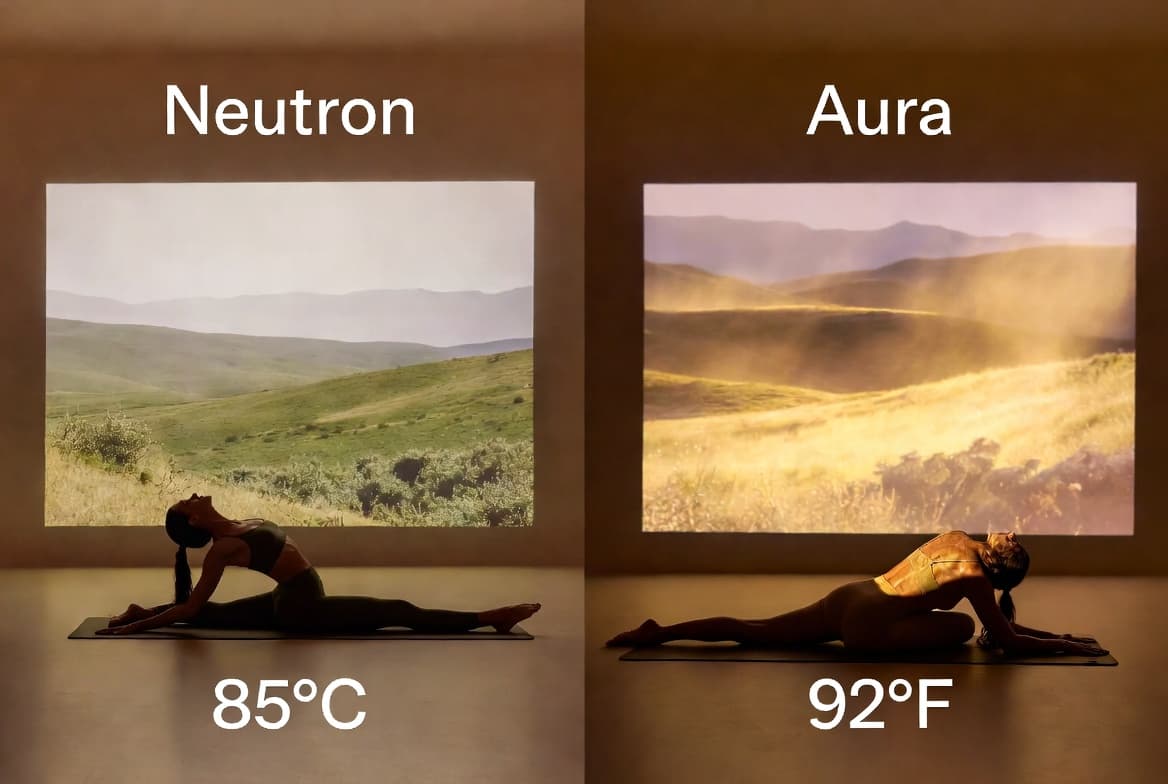
ALIVE runs yin-style yoga warm, which almost no other studio in Dallas-Fort Worth does as a regular class format. Neutron is not on the ALIVE schedule right now. Aura (Yoga Calm) at 92°F is the yin-style class you can book today, and it is what the recommendations below point to.
This matters because the yin spectrum isn't one-size-fits-all. Some days you want deep connective-tissue work and long stillness. Other days you want the calming outcome without committing to five-minute holds. Aura is built for the second, and it gets you a good way toward the first.
Here's a quick guide to Aura, who it's for, and how it compares to the traditional yin format for anyone deciding what to book today.
Quick Comparison
| Neutron (Yin Yoga) | Aura (Yoga Calm) | |
|---|---|---|
| Temperature | 85°F / 50% humidity | 92°F / 50% humidity |
| Category | Traditional yin | Yin-adjacent flow |
| Pacing | Very slow, static holds | Gentle flow, longer holds than vinyasa |
| Hold length | 3–5 minutes per pose | Shorter holds, some movement between |
| Movement | Minimal — mostly still | Gentle transitions, slow flow |
| Mental demand | High (stillness tolerance) | Moderate (calming intent) |
| Primary intent | Connective-tissue work + recovery | Parasympathetic reset + gentle movement |
| Heat feel | Warm floor, easy to settle into | Noticeably warmer, muscular release deeper |
| Best for | Deep yin practice, tight-tissue work | Restorative outcome, vinyasa down-shift, yin-curious beginners |
Neutron at a Glance
Neutron (Yin Yoga) is ALIVE's traditional yin practice. 85°F is our lowest heat, designed for a passive practice where you're not generating your own warmth.
What a class looks like:
- 60 minutes long
- 8–12 poses, each held 3–5 minutes
- Mostly seated or reclined — floor-based
- Muscles intentionally soft; shapes found at the edge of sensation (not the deepest possible)
- Props used generously: bolsters, blocks, blankets, straps
- Minimal teacher cueing — quiet by design
Who takes Neutron:
- Practitioners coming from intense training who need deep tissue work — runners, cyclists, hot-yoga regulars, HIIT athletes
- People with chronic hip, lower-back, or shoulder tightness that active stretching hasn't resolved
- Anyone building a consistent recovery practice alongside hard workouts
- Yoga practitioners who've done yin in cool rooms and want to experience what warmth adds
- Members using yin as a meditation-adjacent practice for mental stillness training
Who should probably start elsewhere:
- Absolute beginners new to yoga entirely (try Aura or a flow class first to get acquainted with the format, then come to Neutron)
- People actively looking for a workout (Neutron isn't that — try Atom, Wave, or Particle instead)
- Anyone with acute joint injuries where long loading could aggravate the condition (check with a medical provider first)
Aura at a Glance
Aura (Yoga Calm) is ALIVE's yin-adjacent flow class. It's not strict yin — you move between poses, holds are shorter, there's a gentle flow shape to the sequence. But the calming intent is pure yin. The outcome — deep parasympathetic reset, the feeling of leaving restored — is what most members seek from restorative yoga.
What a class looks like:
- 45 minutes long
- Gentle flow sequences with longer-than-usual holds
- A slowed-down version of the foundational Atom sequence
- Warmer (92°F) than Neutron — you'll feel the heat clearly
- Some movement throughout — you're not fully still
- Moderate cueing from the teacher
Who takes Aura:
- Anyone who's tried restorative yoga elsewhere and wants the same outcome with heat amplification
- Members who want the calming, rest-and-reset effect but prefer some movement to full stillness
- Vinyasa practitioners down-shifting on recovery days — Aura bridges flow and yin
- Beginners who are curious about yin but aren't ready for five-minute still holds
- Anyone managing stress or nervous-system dysregulation who wants the deepest parasympathetic effect ALIVE offers
- Practitioners who find traditional yin at 85°F slightly too cool and prefer the deeper warmth of 92°F
Who should probably start elsewhere:
- People specifically looking for traditional yin's deep tissue work (Aura touches this, but the long-hold format is not on our schedule right now)
- Anyone looking for a cardiovascular workout (pick Atom or Wave)
Which One Should You Take Today?
Here's a quick decision guide based on what you're actually feeling right now:
"I had a hard week and my body is tight everywhere." → Aura. The warmth plus the longer holds is what gets a tight, overworked body to let go.
"I'm burnt out and need my nervous system to calm down." → Aura. The warmth + gentle movement produces the most pronounced parasympathetic response on ALIVE's schedule.
"I did a hard hot yoga class yesterday and I'm sore." → Aura. A recovery practice that releases the tissues the hot class worked.
"I want yoga today but not a workout." → Aura. Gentle movement, calming intent, no workout.
"I've never done yin before and I'm nervous." → Aura. A soft entry: shorter holds, some movement, warmer room.
"I need to sleep better." → Aura, ideally in the evening 2–4 hours before bed. It helps whether the sleep blocker is stress or physical tension.
"I can't sit still." → Aura. Stillness is a trained skill, and Aura's gentle movement lets you build it gradually.
"I want the most intense recovery experience ALIVE offers." → Take Aura in the morning and come back for a second one in the evening. A full yin-style day.
The Week That Most Members Land On
After a few months of practicing, most ALIVE members who include yin in their routine settle into a cadence that looks something like this:
1–2 Aura classes per week. For restorative outcome, stress reset, and the calming parasympathetic effect. Often late in the day or on recovery days.
A second Aura after hard training. Typically the day after a long run, a lifting session, or an intense hot-yoga class. Targets the tissue tightness the harder work leaves behind.
Occasional double-up. Once in a while, especially during stressful weeks or after injuries, members take Aura several times in one week. The repetition compounds.
The exact rhythm depends on your other training and your stress load. More training and more stress both point the same way: more Aura. The nice part is you can match the practice to what you actually need on a given day.
Getting Started
Aura runs at ALIVE's Plano, Southlake, and Las Colinas locations.
Classes every 30 minutes throughout the day. No advance booking required for most slots.
Coached format. Every class has an instructor in the room offering prop setup, modifications, and form corrections. Especially useful for first-time yin practitioners.
Membership includes everything. One membership, all class types, so you can pair Aura with any other format on the schedule.
$24.99 first month unlimited. Your trial month is the best way to figure out which class works for your body. Take a few Auras alongside the faster formats and you'll find your rhythm quickly.
Related Reading
- What Is Yin Yoga? A Complete Guide — The foundational explainer
- Heated Yin Yoga: Why It Works — How warmth changes the practice
- Yin Yoga vs. Vinyasa — Comparing the two ends of the yoga spectrum
- Yin Yoga vs. Restorative Yoga — The two most-confused practices
- Yin Yoga for Beginners — Starting out
- Benefits of Yin Yoga — What the practice actually does